Week 1
Blog Entry 1- Sustainability and the Urban Environment, Global Trends in Sustainability
- My definition of Environmental Sustainability– being able to maintain the human population with a neutral effect on the environment. Sustainable development means we can meet the current and future needs.
- We need sustainability in order for future generations to survive
- Humans are over consuming an an unsustainable rate
- Huge gap between the Global North and the Global South– negative growth
- The concept of sustainability is a multi-faceted concept. Challenge are unique to different people and places
How to achieve sustainability?
- To achieve sustainability, one needs to incorporate the 4 pillars – social, environmental, human and economic
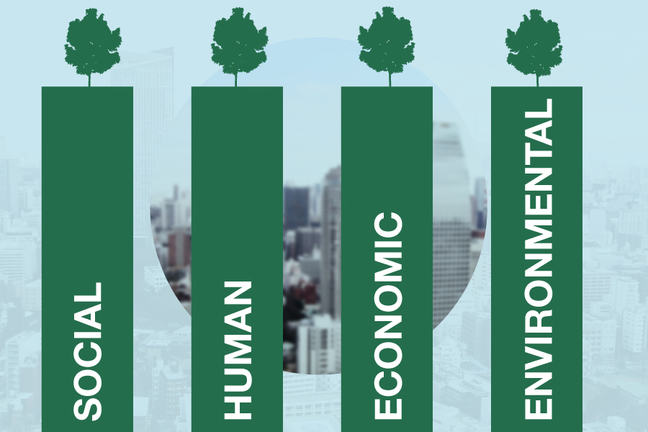
- These for items need to be considered when targeting sustainability as they are the main functions of any society
- Triple bottom line – environment, economic, social – all equal sustainability!

- So what can we do as students?
- The first step is to start thinking. Thinking & talking about sustainability helps ideas grow and develop
Week 2
Blog Entry 1 – Reflection on Lecture Topics – Sustainable Waste, Food Security & Landfills
Sustainable Waste Management
- All countries and communities create waste – waste is unavoidable
- We can be sustainable and still have waste! Therefore proper waste management is important
- It is up to the more economically developed countries to put in place waste management plans as an example
- Typical waste management – bin separation, collection, recycling etc
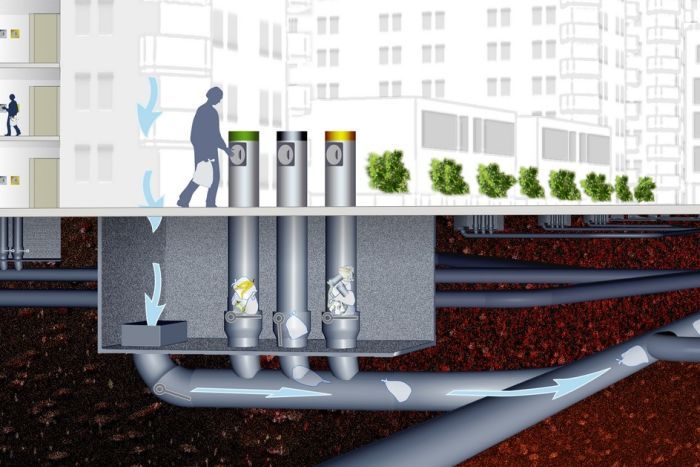
- Future management ideas – storage and collection points that go underground
Landfills
- Landfills are a huge problem – but they are necessary in an imperfect world
- Landfill creates huge methane emissions
- The aim of landfill management is to reduce environmental impact for present and future
- Legacy
- Typically very old difficult to convert to usable land
- Expensive!
- Can convert to great social areas
- Operational
- bio fuels – this can provide energy and jobs to communities
- Future
- Ideally non existent but probably not possible
- Bio fuels, 100 recycling waste
Blog Entry 2 – General Weekly Reflection
- Landfill – what can every day people do?
- Reduce green waste put into regular bins
- Green waste (scraps) greatly increase greenhouse gas emissions as they are organic materials
- Composting is simple and many apartments have green bins – mine included which I never used
- Reduce, reuse, recycle – it all reduces landfill
- Landfill and biofuel – this could be a really interesting initiative for poorer nations
- SE Asia has huge amounts of uncapped landfill which could be utilised into biofuel! It would also provide jobs and encourage people to dispose of waste correctly
- Very interesting article – https://www.thenatureofcities.com/2015/02/01/ways-forward-from-chinas-urban-waste-problem/
Week 3
Blog Entry 1 - Reflection on Lecture Topics - Green Infrastructure
- Connecting elements of natural and man-made to create an environment that has positive effects on the 4 pillars of sustainability
- Social
- Community interaction and engagement – food gardens
- Nice place to live in aesthetically
- More places to socialise
- Environmental
- Lower heat islands
- Increased biodiversity within the city
- Better air quality
- Economic
- Cheaper to run cities! Ie/ reduction in need for conditioning, purifying
- Implementation of GI can be difficult as it is often driven by policies, however individuals and companies can create significant impacts
- Greater London Authority has made recommendations such as retrofitting buildings, green transport and increased greens spaces
Blog Entry 2 – General Weekly Reflection
- Green design in Sydney is so essential.
- Working next to Central Park, I can see how the green space there is utilised by the community, and One Central Park not only reduces the heat island of Broadway, but is a beautiful building in itself
Cambodia Trip
- 10 days in Cambodia – environmental sustainability is certainly not the first though on peoples minds!
- HOWEVER, surprising to find lots of small initiatives!
- Metal straws in many cafes, water bottle reuse
- Discovered a really interesting company based in Cambodia that are implementing many sustainable ideas
- Back in Sydney, I am thinking of ideas I can take back to SE Asia. One was the Precious Plastics workshop – https://preciousplastic.com/en/community.html
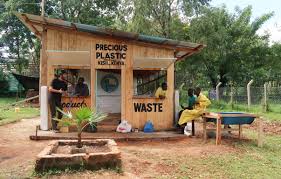
- This lead me to Naga Earth in Cambodia – an incredibly existing NGO!
- http://www.nagaearth.org/plastic-recycling-project
- Plastic recycling
- Biofuel
- Soap making
- Plastic recycling machine is really interesting. Plastic recycling and printing is a great way to engage the community, recycle, encourage creativity and teach the next generation, create jobs!
Week 4
Blog Entry 1 – Reflection on Lecture Topics
- Unsuitability directly affect lives
- Unsustainable practices lead to increase in global warming and increased periods of weather volatility
- Australia is at the forefront of this with bush fires and droughts, coral reef damage
- Best method of everyday person to reduce greenhouse gas emissions?
- Reduce car use!
- Solar farms are an effective way of providing sustainable energy. Why don’t we have more in such a sunny country??
- https://reneweconomy.com.au/solar-takes-centre-stage-in-south-australia-becoming-no-1-energy-source-in-middle-of-day-68689/
- South Australia now was 100% solar energy during middle of day
Blog Entry 2 – General Weekly Reflection – Disaster Resiliance
- My recent Cambodia trip has made me think that I should push myself to think of new environmental initiatives for the developing world and my own life
- Work I have set up recycling bins for my new construction site, and also sent a company wide email about some initiatives including;
Paper & Plastic Recycling
- We have recently used Visy – please contact Shikha at shikha.behl@visy.com.au or myself and Kaitlyn to help set up
- Collections $9, Monthly Cost $4, Once off Delivery Fee $100 (or $25 is project is over a year)
- Mixed paper & plastic so nice and easy for everyone on site!
Sign on Site (Online Sign in App)
- Reduces paper & ink cartridges from sign-in or induction sheets
- Contact Shane Morgan for details
TV’s Instead of A1 Printing
- Set up with USB to show slide show of messages/signage or Procore hub to allow subbies to access drawings
- Contact IT team for info on
No Supplying of Plastic Cups
- As simple as it sounds! Put up signs encouraging people to bring their own water bottles to site. Don’t supply plastic cups at water dispensers
Dura Frame Laminating
- Reusable laminating slips that reduce plastic waste to landfiull
- https://www.officeworks.com.au/shop/officeworks/p/durable-duraframe-a4-sign-holder-cu99110185
Paint Wash Out Bays
- Allows all paint to become solid waste without chemicals
- Aims to look into Precious Plastics Model for UNSW campus
Week 5
Blog Entry 1 – Reflection on lecture Topic – Smart Cities
- There is no strict definition of a Smart City. Smart cities aim to utilise technology to improve on the citizens lives
- Smart city concepts can be used in any city high or low socio-economic status location
- The concept for a smart city is problem driven
- Smart City strategies are developed through 3 important features – collect, communicate and crunch!
- The collection of data mainly implemented and initiated by governments and councils
- These problems can be simple or intricate. For example data can be collected and analysed to implement strategies to reduce waste or improve transportation speeds/Reduce commuting times
- What is driving the need for smart cities?
- Increase in urban population– more and more people are choosing to live in cities. This leads to specific problems that need technological solutions! For example, increase in traffic, CO2 emissions, waste
- Case Study – Barcelona Traffic Network
- Traffic lights are manipulated for busses to ensure they run on time
- Emergency service vehicles are given priority for green lights through intersections
- Many cities in India are claiming they are smart cities in order to access grants, however their strategies are not always very effective
Blog Entry 2 – General Weekly Reflection
- Reflection on the lecture, specifically regarding the failures of some smart cities concepts in India have made me think about how effective Sydney’s smart city strategies actually are!
- We have ‘Smart City Plan’ but is this actually effective? Are we far behind other cities?
- Contactless credit card tap on/off for transport
- There is no government developed transport app for live transport timetables!
- 5G is the next main requirement to allow smart cities to develop – this will result in better live tracking of data
- https://www.forbes.com/sites/gilpress/2018/03/22/6-lessons-from-tel-aviv-for-successful-digital-transformation-of-smart-cities/#24c6e38d5330 – Tel Aviv are experiencing a technological evolution with the DigiTel app
- https://newsroom.unsw.edu.au/news/science-tech/how-does-city-get-be-smart-how-tel-aviv-did-it
- The app connects and shares information such as road closures, discount codes base on interests, event information etc
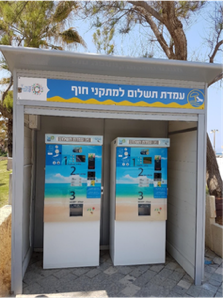
- Kiosks are set up around the city
Week 6
Blog Entry 1 – Reflection on lecture Topic – Sustainable Water System
- Water is often considered a global infinite resource
- This couldn’t be further from the truth, and Australia in particular is seeing signs of serious underlying issues
- Common assumption that once we run out of catchment water, there are easy way to harvest alternatives
- Sydney has a desalination plant but used enormous amounts of electricity to produce clean water
- Victoria’s central highlands are suffering from deforestation and will collapse. Deforested areas use a lot more water
- https://www.theguardian.com/australia-news/2018/may/01/morning-mail-logging-melbourne-water-supply-forest-ecosystem-collapse
- As the world’s population grows, so does the need for food
- Agriculture has a terrible impact on water
- Agricultural practices are old and outdated, and consume more water than required
- The practices also destroy the soil so that they cannot absorb water, and result in high levels of erosion, and a drop in tableland water
- https://www.lenntech.com/water-food-agriculture.htm – up to 70% of the world’s water goes into agriculture. Cattle uses approx. 4000m3 of water per head
- Technologies can be utilised to reduce water – https://cuesa.org/article/10-ways-farmers-are-saving-water
- Cities can use intensive farms for vegetables
Blog Entry 2 – General Weekly Reflection
- This Weeks’s lecture has prompted me to explore urban gardens and the water use within the construction industry
- Urban farms have a wide range of benefits
- They are intensive small plots of lands such as backyards, roof tops or vertical walls,
- Environmentally, urban farms use less water as they on a smaller intensive scale, reduce food scrape to landfill, reduce embodied energy costs associated with transportation from farm to city
- Socially, urban farms encourage the sharing of space and can be a great social meeting point
- Case Study: Pocket City Farms Camperdown
- Disused bowling green in Camperdown – 1200m2 of organic sustainable grown produce for Sydney restaurants
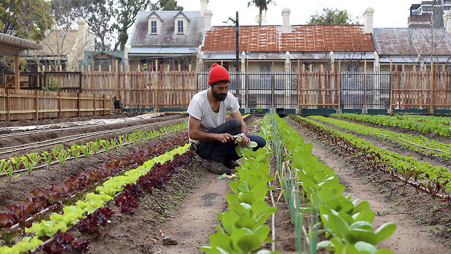
Organic market farmer Michael Zagoridis is part of the Pocket City Farms team. (Pocket City Farms)
- This week I have also been researching the use of water within my of field of work, construction
- Water is used in 2 main ways in construction, the production and fabrication of materials, and in the post construction ‘operation life cycle’
- Concrete uses significantly more water than timber, and there is a lot of technology being developed to allow timber to be used in lieu of concrete ie/ Cross Laminated Timer slabs and beams
Week 7
Blog Entry 1 – Reflection on lecture Topic – Compact Cities
- The urban design idea of compact cities are becoming increasingly popular, as the rate of urban growth increases
- Compact cities are bases around high density with mixed land uses, which encourages more sustainable transportation (walking, buses, cycling)
- Compact cities are opposite to sprawl areas
- Compact cities can reduce their ecological footprint as they are designed so citizens are provided all needs within a small area, and thus do not need to travel long distances
- Compact cities are also known to increase social wellbeing, as there is an increase in social ties
- Compact cities can lots of room for improvement. Green spaces , vertical gardens and small incentive farms can be integrated
- These areas are not always popular as people like their big cars and houses
Blog Entry 2 – General Weekly Reflection
- This week I focused my research on next week’s topic of electric vehicles
- EVs are still a rare site within Australia
- Why is this the case? Policies, costs, lifestyle
- The Australian government has not taken a stance to begin mandatory phasing of EVs. In fact the Prime Minister Scott Morrison recently stated that introducing EV’s would be the “end of the weekend”
- The government simply does not support EV’s and this directly effects sales
- From this, manufactures are more reluctant to import different models of EV’s if the demand does not exist
- Furthermore, Australians are reliant on their cars, and many believe that EVs will not suite their heavy driving, large car lifestyle
Week 8
Blog Entry 1 – Reflection on lecture Topic – Renewables
- Australia’s integration of renewable energy solutions has unfortunately greatly affected by government policies
- Australians are acclimatized to a certain lifestyle which is not particular sustainable
- We live in very sprawled cities, and are not accustomed to living within our means
- However, due to the imminent unreversible effects of climate change, small steps are being made but not without serious road blocks
- South Australia has invested heavily in PV farming, however fear mongering due to power outages and belief that solar cannot produce enough power
- Electric cars are an obvious solution in the fight to reduce global emissions
- However Australia is a slow adopter due to old habits, untrusting of new technologies and slow government polices to introduce EV’s
Blog Entry 2 – General Weekly Reflection
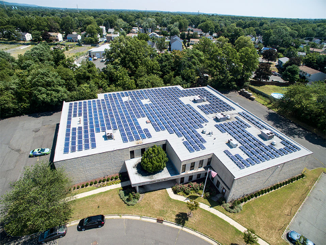
- This week I have been focusing on PV’s within a commercial/high density environment PV farming is most effective in rural environments, where large plots of land can be used to establish high number of PV panels.
- However can PV panels be utilized in a commercial environment?
- Yes! Many commercial buildings are now utilizing rooftop PVs.
- https://www.commercialrealestate.com.au/news/five-fold-growth-in-solar-panels-on-commercial-buildings/ in fact over the last 3 years PVs in commercial buildings have grown by over 400%
- The Australia PV institute conducted research to the available roof space of PV’s in Adelaide
- https://www.solarquotes.com.au/blog/adelaide-cbd-solar-mb0541/
“Based on average results of four methods used, the findings suggest 43% of Adelaide CBD’s total roof area could accommodate 516,000 solar panels (based on 250W modules), generating 174 gigawatt-hours of clean electricity annually and meeting 26% of the CBD’s electricity demand.”
Week 9
Blog Entry 1 – Reflection on lecture Topic – Microclimates in the Urban Environment & the Circular Economy
Microclimates
- Distinctive climate of a small-scale area
- Weather variables, such as temp, rainfall, wind, humidity may be subtly different from the conditions prevailing over the area as a whole
- Examples of microclimates: coastal regions, forests and urban regions
Urban microclimates
- Temperature affected by industrial and domestic buildings (density and height)
- Heat absorption by concrete, brick and tarmac during the day and its release at night
- Reflection of light by glass buildings and windows
- Emission of pollutants from cars and industry – formation of smog and cloud (pollution dome)
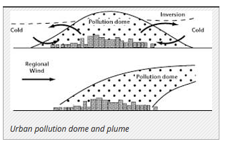
- Relative absence of water in urban areas
- Absence of strong winds (tall buildings disturb airflow)
- Urbanisation constitutes the main cause of urban heat island formation
- http://www.urbanheatislands.com/
- Managing urban micro climates
- https://www.sciencedirect.com/science/article/pii/S096014811400336X
Sustainable Circular Econony
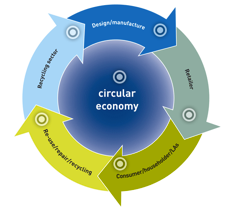
http://www.wrap.org.uk/about-us/about/wrap-and-circular-economy
- As opposed to linear economy “make, use, dispose” circular economy “make, use, re-use”
- Concept that promotes environmental and societal benefits
- Reduce waste and environmental impacts of our production and consumption
- “Made to be made again”
- Maximise on value of resources
- Case Study: Three Farm – education in 3D printing
- Adding economic value to our plastic waste
- “Give a man a fish, and you feed him for a day; teach a man how to fish, and you feed him for a lifetime.”
- Case Study – Singapore Circular Sustainability
- Singapore use of incineration is not a circular solution, was waste is simple turned from solid to ash & gas
Blog Entry 2 – General Weekly Reflection
- As I will be pitching the precious plastics model next week to the MCIC, and in conjunction with my assignment topic I have been researching global plastic use and recycling
- It is shocking to learn that a majority of countries do not have any sort of formal recycling
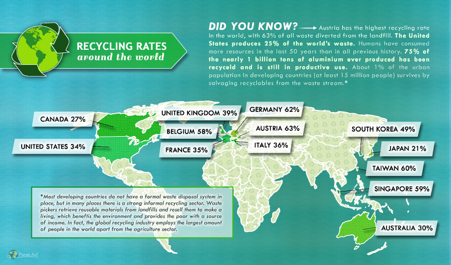
- https://www.planetaid.org/blog/recycling-rates-around-the-world
- Almost all African countries do not have recycling at all, but feature a large number of individuals who collect scrap and valuable waste for reselling
- My assignment focuses on Singapore’s recycling rate which is considerably low, but
Week 10
Blog Entry 1 – Reflection on lecture Topic
- This week featured presentations from each tutorial group
- The common theme was the city of Amsterdam and Parramatta
- It was evident that Amsterdam is setting the benchmark for innovation and smart city initiatives
- For example, Amsterdam captures waste sludge from the rivers and turns it into cattle feed
- Parramatta on the other hand is lagging behind, typical of many Australian municipalities
- This seems to be a common theme, as the lecture on Sydney’s planning future did not seem to be overly innovative
Blog Entry 2 – General Weekly Reflection
- This was the final week of the semester
- Coming into this course I had a rather narrow perspective of sustainability, based around what my personal interests were
- I have really developed my knowledge
of other areas of sustainability that I would not have typically expressed
interest in such as;
- Social aspect of sustainability
- Urban farming practices
- The course has provided opportunity to learn about a wide variety of different areas of sustainability, from many industry professionals
- I had the opportunity to present to the cohort and MCIC to implement a precious plastics workspace on campus. I have spent many hours researching and learning about plastic recycling, and thinking of ways to bring this idea to USNW and to developing nations

 Sustainable Development Blog